.png)
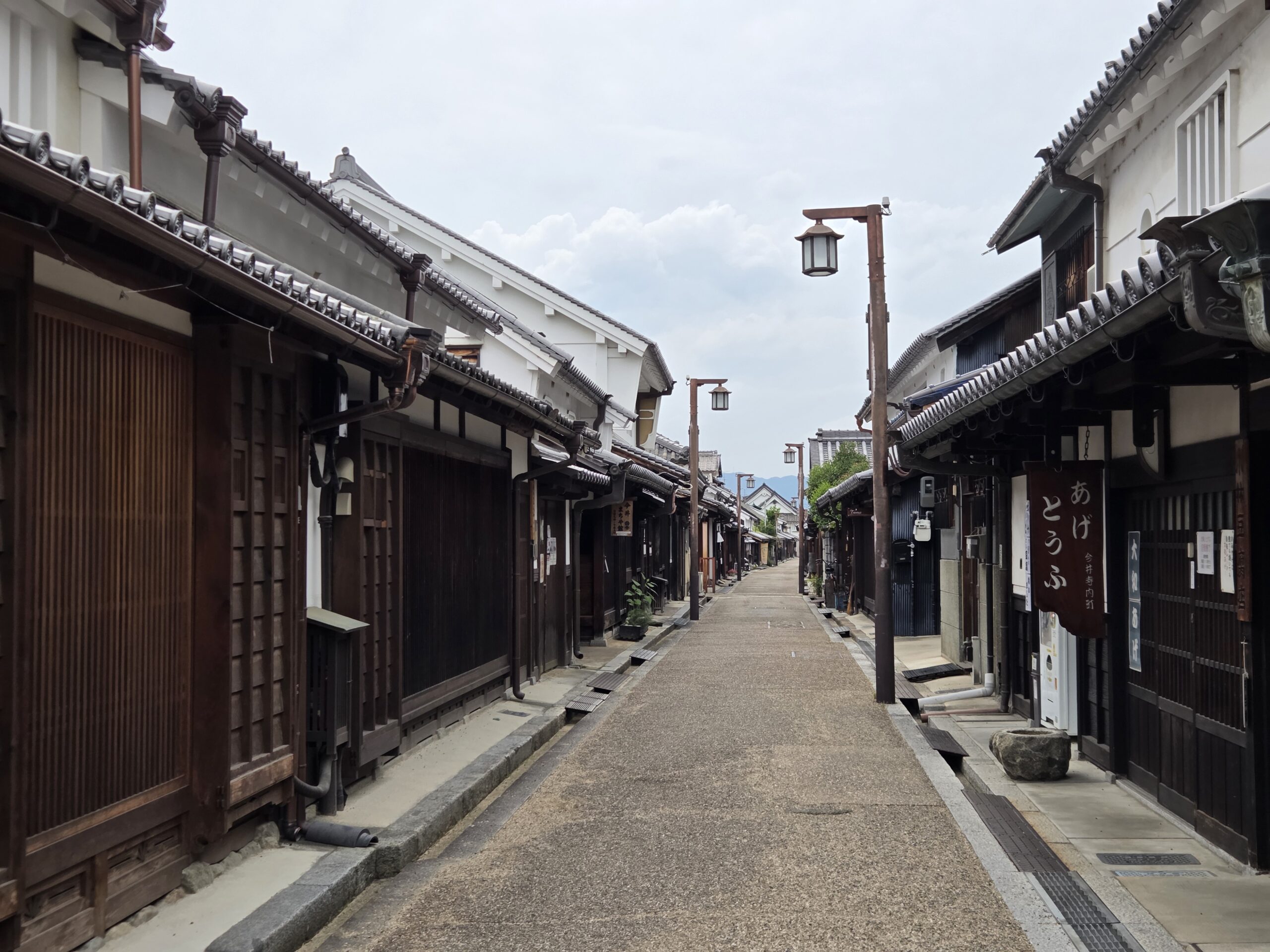
Modern life is comfortable.
We live in concrete buildings, turn on the air conditioning when it gets hot,
and renovate our homes to suit the way we live today.
That is why I find Imai-cho so remarkable.
For more than 200 years, its historic townscape has been passed down from one generation to the next.
Cross a small bridge and step into its narrow streets, and modern Japan seems to quietly disappear.
Wooden merchant houses with latticed windows stand side by side,
white plaster walls line the lanes, and streets laid out centuries ago still shape the town today.
Walking here can feel like stepping back into the Japan of the samurai era.
But Imai-cho is not a historical theme park.
People still live here.
Behind the wooden lattices and old walls are homes that have been passed down through generations.
Buildings that might have become museums elsewhere remain part of everyday life.
This is not a recreation of Edo-period Japan.
It is a town that has continued living for more than 200 years.
A Town Where the Past Is Still Part of Everyday Life
Imai-cho lies in Kashihara, Nara Prefecture, not far from Asuka.
Today, it is peaceful and remarkably quiet.
Yet several centuries ago, it was one of the most prosperous merchant towns in southern Yamato,
the historic name for this part of Nara.
At its height during the Edo period, around 1,000 houses stood within the town, with a population of more than 4,000.
It even became prosperous enough to issue its own form of local currency.
Walking through these quiet streets today,
it can be difficult to imagine how much commercial activity once took place here.
Imai-cho developed as a self-governing community,
surrounded by a moat with controlled entrances into the town.
Its narrow streets were designed centuries before cars became part of everyday life.
That makes walking one of the best ways to experience Imai-cho today.
Rather than moving quickly from one sightseeing spot to another,
you can slow down, turn into the narrow lanes and begin noticing the small details of the town.
Here, walking is not simply a way of getting around.
Walking is part of the experience.
How Did an Entire Historic Town Survive?
One of the most remarkable things about Imai-cho is that the old town is still here today.
Imai-cho grew around Shonenji Temple and later became a wealthy merchant town
through trade with Osaka and Sakai.
During the peaceful Edo period, business grew, and many merchants lived and worked here.
Later, Imai-cho was fortunate to escape major damage from war.
Modern development also took place mainly outside the old town.
Because of this, many of its old streets and traditional houses survived.
Today, Imai-cho is protected as an Important Preservation District for Groups of Traditional Buildings.
But what makes Imai-cho truly special is that people still live here.
For generations, local families have lived in these old houses.
They have taken care of them, adapted them to modern life, and passed them on to the next generation.
The town survived not because time stopped here, but because life continued here.
Many of these houses belonged to merchant families.
Imai-cho was a prosperous trading town with strong connections to major commercial cities
such as Osaka and Sakai.
The houses were not only family homes.
They were also places where people lived, worked and did business.
When you have a chance to step inside one of these historic houses,
you can begin to imagine how merchant families actually lived.
This brings the history of Imai-cho much closer to us.
Inside a Merchant House — Stories Passed Down Through Generations
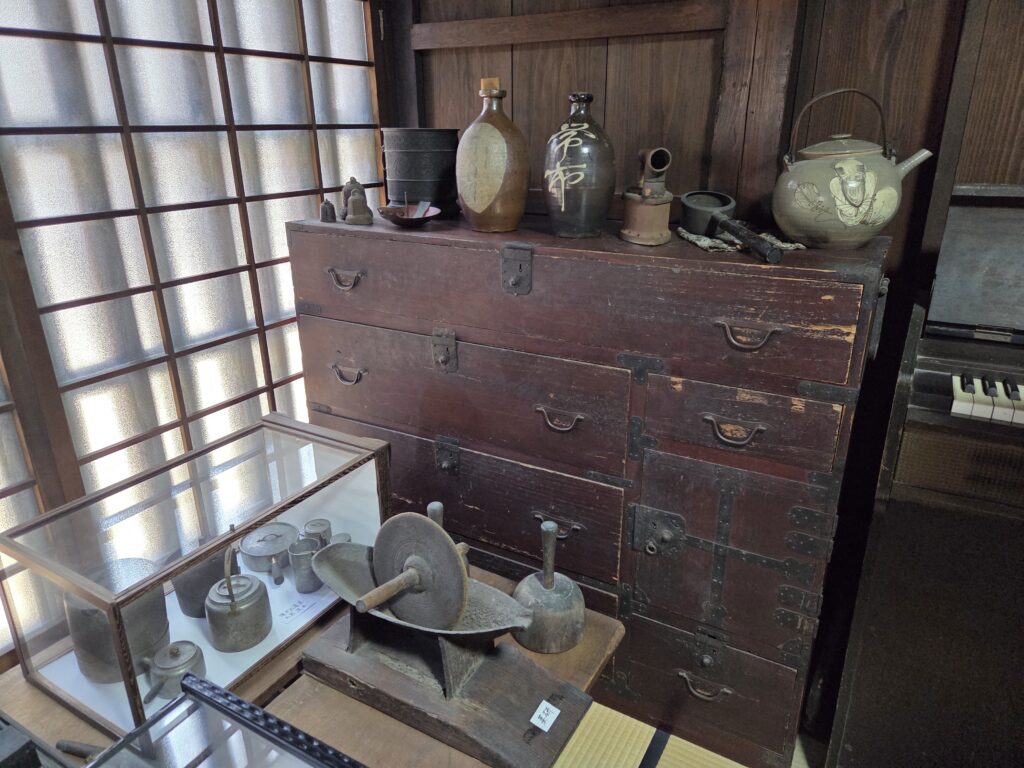
The story becomes more personal when we step inside a historic merchant house.
At the Takagi Residence, old furniture, ceramics and household objects give us clues about the lives of the people who lived there.
At first, they may simply look like old objects. But think about who used them.
What was everyday life like in this house?
How did a merchant family work and live under the same roof?
These objects were not originally collected for a museum. They were part of people’s lives.
This is an important difference.
When we look at an old house from the street, we see its architecture.
When we step inside and look at the objects that were used there,
we begin to think about the people who lived behind those walls.
The houses, the objects and the stories all belong to the history of the same town.
For me, this is one of the most interesting ways to experience Imai-cho. History begins to feel less distant.
Look Beyond the Architecture
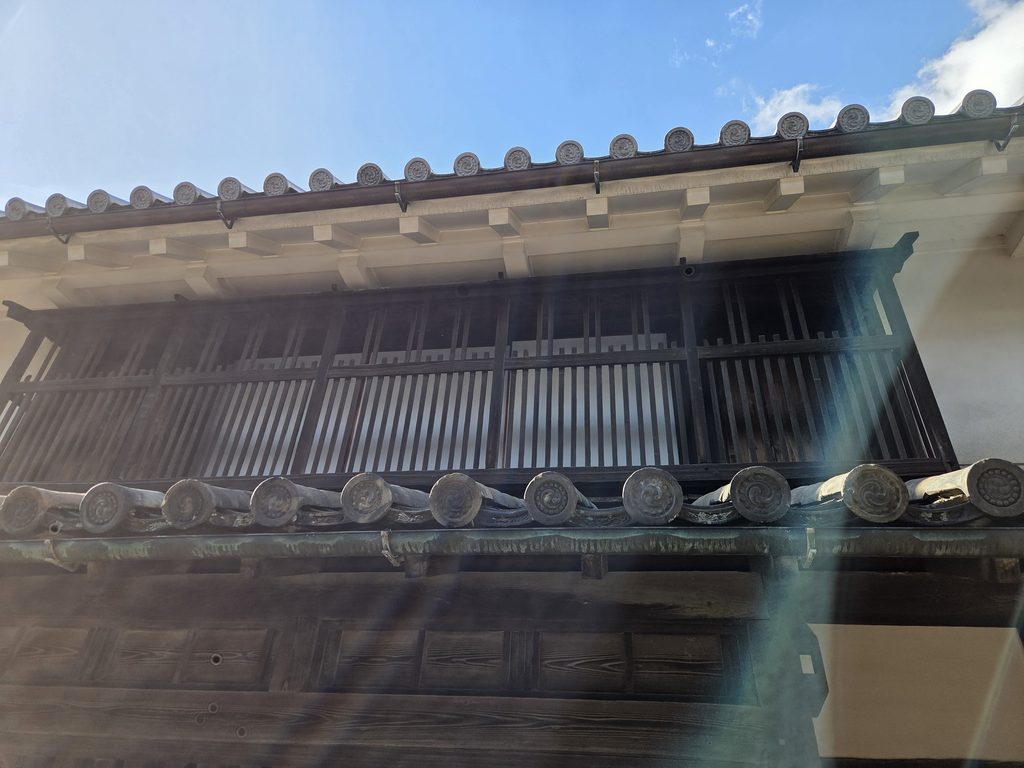
One of my favorite things about Imai-cho is that the more slowly you walk, the more you begin to notice.
Look at the windows.
Why are they shaped this way?
Look at the wooden lattices facing the street.
Why did merchant houses need them?
Compare one house with another. At first, many of the buildings may look similar.
But when you know what to look for, you begin to see differences.
Even the style of the houses changes as you move from east to west through the town.
These architectural changes are connected to changes in how merchant families lived and worked.
Architecture is not only about the design of a building.
It can also tell us about people’s work, family life and society.
That is why Imai-cho becomes more interesting when you understand what you are looking at.
Without the story, you see an old house. With the story, you begin to see how people lived there.
Shonenji Temple — Where the Story of Imai-cho Began
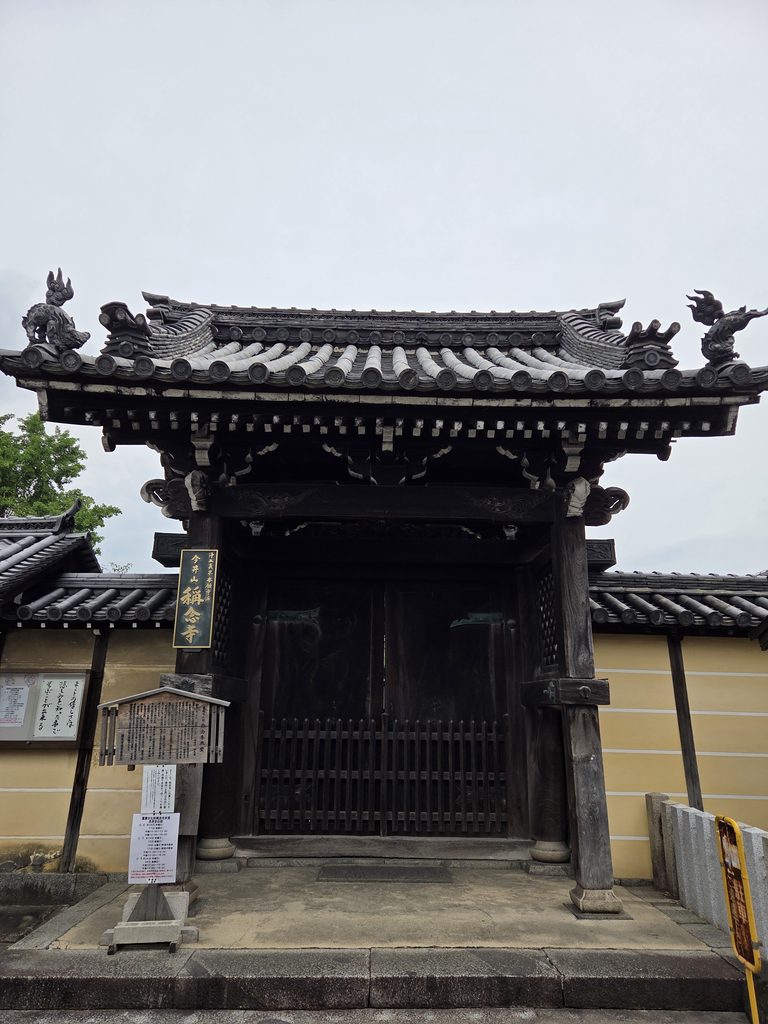
To understand Imai-cho, we need to go back even further than the Edo period.
The town developed around Shonenji, a Buddhist temple established in the 16th century.
During Japan’s Sengoku, or Warring States, period, a fortified community grew around the temple,
protected by moats and earthworks.
Over time, this religious community developed into a prosperous merchant town.
Shonenji therefore connects several different chapters of Japanese history.
The town began during the age of civil war, prospered during the long peace of the Edo period,
and continued into the Meiji era, when Japan was becoming a modern nation.
Emperor Meiji even stayed at Shonenji in 1877, during an important period of change in modern Japanese history. When you stand in front of the temple, you realize that the history of Imai-cho is much longer than its Edo-period merchant houses.
The town allows us to follow several centuries of Japanese history in one place.
Water, Sake and the Everyday Life of the Town
History is not found only in temples and important buildings. Everyday life also has a history.
The Asuka River flows along the eastern side of Imai-cho. Near the entrance is an old well known as Sobui. A local story says that Prince Shotoku once drank water from this well. We cannot confirm this as a historical fact, but the story has been passed down in the area for generations.
The well is also said to have continued providing water during dry periods. It supported the people of a town once known as “Imai of a Thousand Houses.”
Today, we simply turn on a tap when we need water. For people living here centuries ago, a reliable well was an important part of daily life.
Sake was another part of the town’s culture. There were once several sake breweries in Imai-cho. Today, Kawai Sake Brewery continues to operate here, and visitors can stop by to enjoy local sake.
This is another example of how the past continues into the present. Sake is not only something we learn about as part of history. It is still made, sold and enjoyed today.
Old Buildings, New Lives
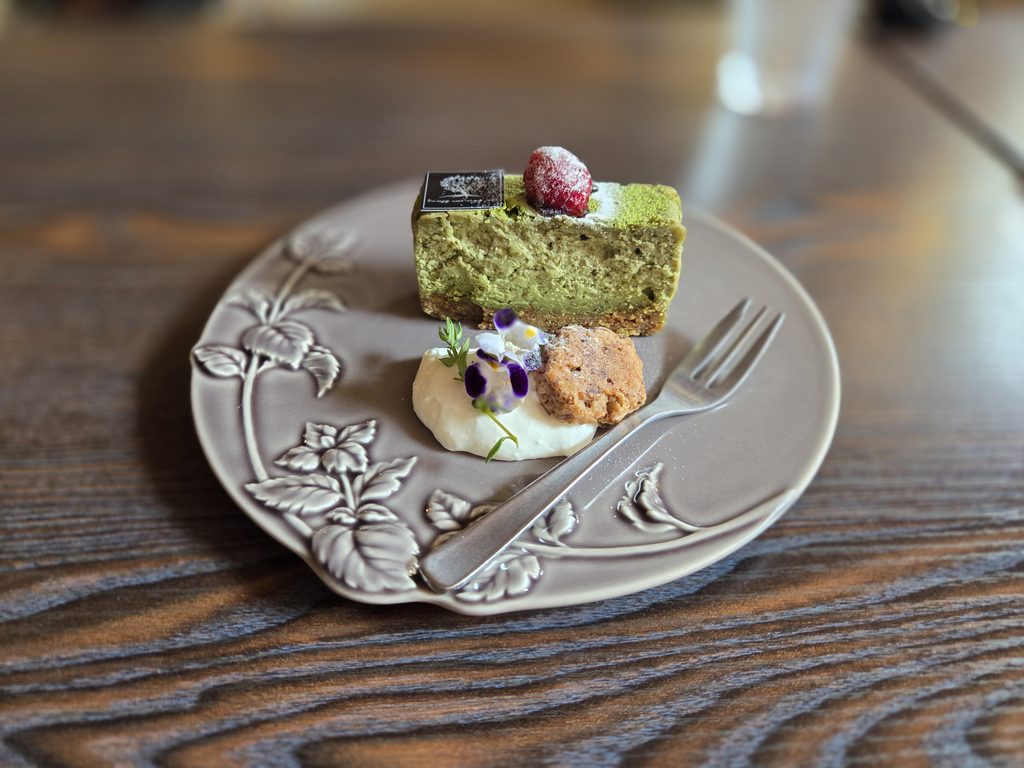
Keeping an old town does not mean that every building has to become a museum. This is another part of Imai-cho that interests me.
Some old buildings are still private homes. Others are now used as shops, restaurants and cafés. One place I enjoy visiting is Hackberry, a café inside an old building.
The interior is filled with vintage furniture, antiques and small rooms, each with its own character. Whenever I visit, I wonder where I will sit. Perhaps upstairs, perhaps in the small space under the stairs, or perhaps in my favorite room, surrounded by books.
For me, enjoying a cup of coffee in an old building is also part of experiencing Imai-cho. The building has a long history, but it still has a purpose today.
Preserving history does not always mean keeping everything exactly as it was.
Sometimes it means finding a new way to use an old building while respecting its character. Imai-cho gives us many opportunities to think about how old buildings can remain part of modern life.
Old, Rare — and Still Alive
Japan has many famous temples, castles and gardens, and they are certainly worth visiting. But there are other ways to understand Japan. Sometimes we can learn from much smaller things.
A wooden lattice on a merchant house, an old well that once supplied water to the community, household objects kept inside an old home, a sake brewery continuing a local tradition, or a café using an old building in a new way. All of these can tell us something about how people lived here.
And people still live along streets that have existed for centuries.
This is what makes Imai-cho special to me. Here, history is still part of everyday life.
You do not enter through the gate of a museum or a historical theme park. You simply cross a small bridge and start walking. Little by little, modern Japan begins to feel farther away.
Walk Imai-cho with Kiyora Travel
I first became interested in Imai-cho years ago, when I worked as an administrative staff member in the Building Guidance Division of a local city hall. What interested me was not only the beauty of the old buildings. I was fascinated by the fact that an entire historic townscape had survived while people continued to live there.
That interest has stayed with me. It has also become part of the way I think about travel today.
When I guide you through Imai-cho, I do not want to simply show you old buildings and give you a list of dates. I want to help you understand what you are seeing.
Why does this house have wooden lattices? How did a merchant family live here? Why did this town become so prosperous? Why did so much of it survive? And how do people continue to use these old buildings today?
Every traveler has different interests. You may be interested in architecture, Japanese history, sake, photography or local life. Or you may simply want to leave the busy sightseeing areas behind for a while and walk through a peaceful Japanese town.
We can slow down and explore according to what interests you. For me, this is one of the pleasures of a private tour.
We have time to look more closely, ask questions and understand the stories behind the places we visit.
Come and walk through more than 200 years of living history in Imai-cho, and discover a quieter side of Japan, one story at a time.