.png)
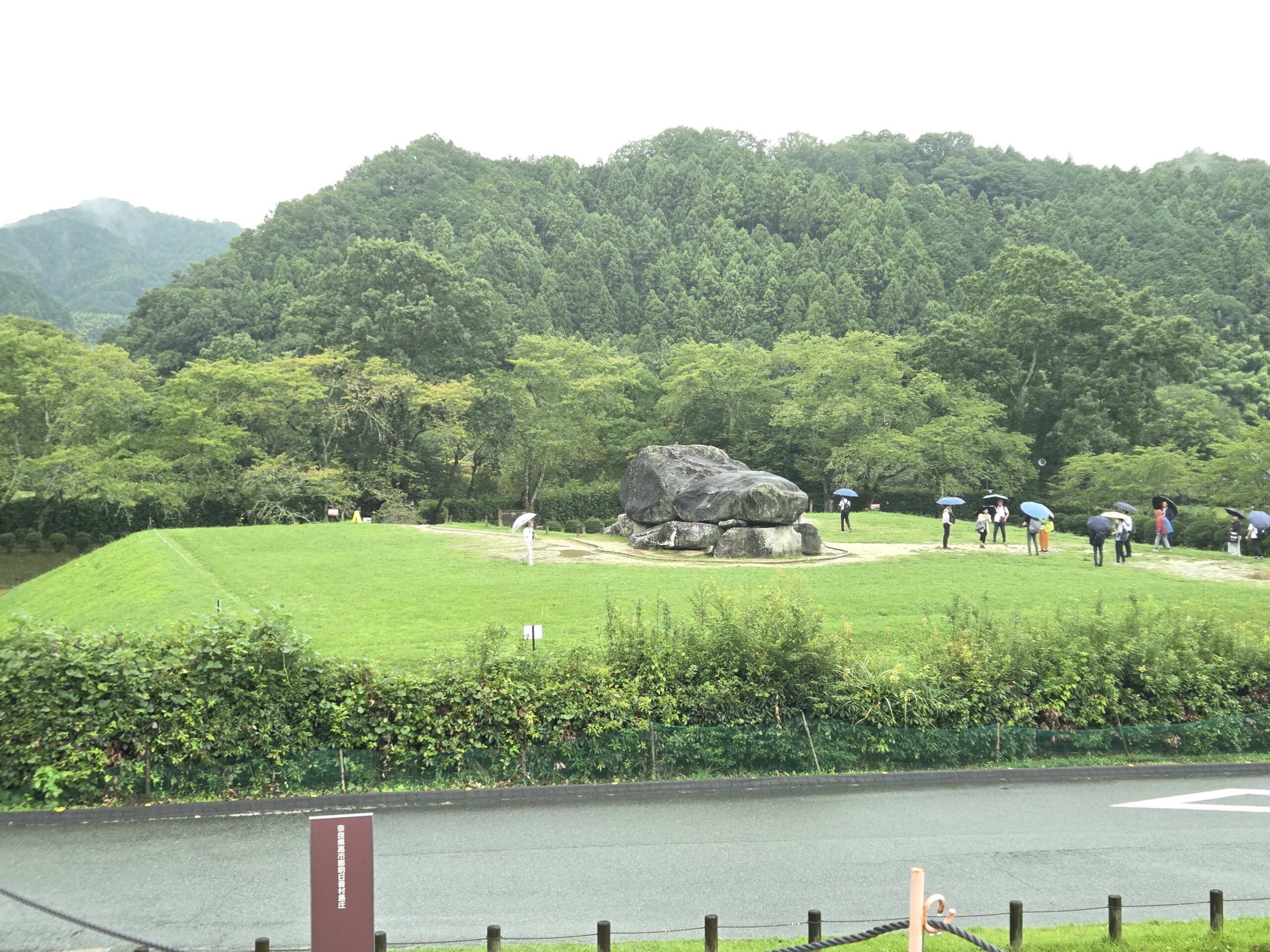
When I bring guests to Asuka, I always tell them the same thing before we start walking: forget what year it is, just for today.
Within a few minutes, it is gone.
There are no tall buildings here, no glass towers, nothing modern breaking the view of the hills. Rice fields stretch between small villages, and old stones sit half-buried in the grass, as if they have always been there. In a way, they have. Some of them for almost 1,400 years.
This is why many Japanese call Asuka the “hometown of the heart.” It is not that their own families came from here. It is that this small valley in Nara is where the idea of Japan itself began.
A Country Begins to Take Form
Toward the end of the 6th century, something new began here. Powerful local clans, who had each ruled their own region, slowly came together under one ruling family. A country, in the modern sense, was being born.
I still find that hard to fully take in. Somewhere in these quiet fields, the earliest version of the country I have spent my career introducing to visitors first took shape.
Stones With No Clear Answer
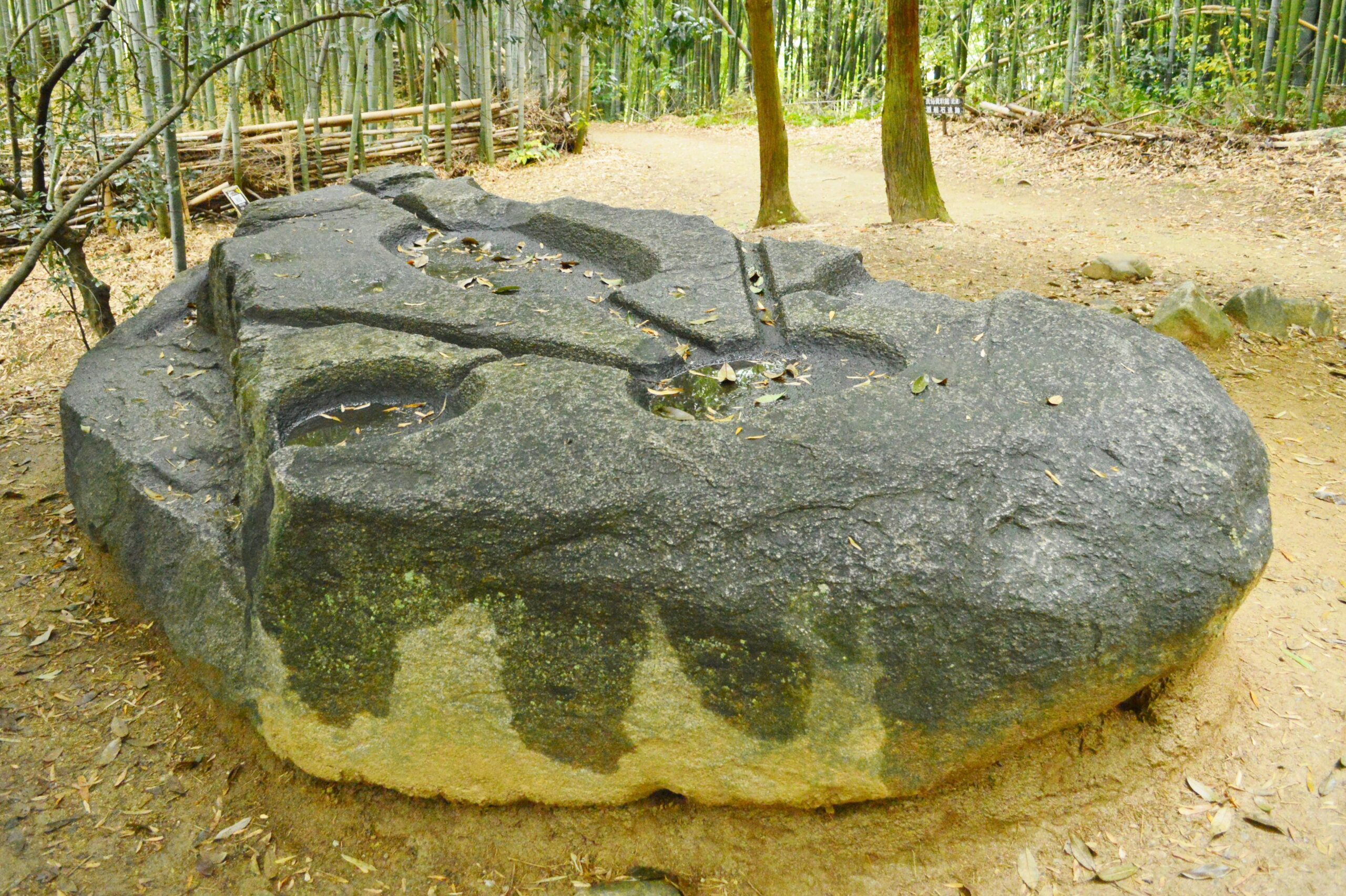
As you walk through Asuka, you start to notice them: strange carved stones scattered across the fields, some with faces, some hollowed like basins, some so oddly shaped that their purpose is still debated today.
Were they used for water rituals? For astronomy? Or for something we no longer have a word for? Archaeologists are still studying them. Many were buried just beneath the surface, and were only dug up in the last few decades, after more than 1,300 years underground. Excavation in Asuka is still an ongoing project.
We do have written records from this time. The old court chronicles, and Japan’s earliest poetry collection, the Man’yoshu, describe events and daily life here in detail. But even historians who specialize in this period do not always agree on how to read them, and each new discovery can change the accepted story a little. What we teach as history today may look different again in ten years.
I like that uncertainty. It leaves room to wonder.
A Story I Have Carried for Thirty Years
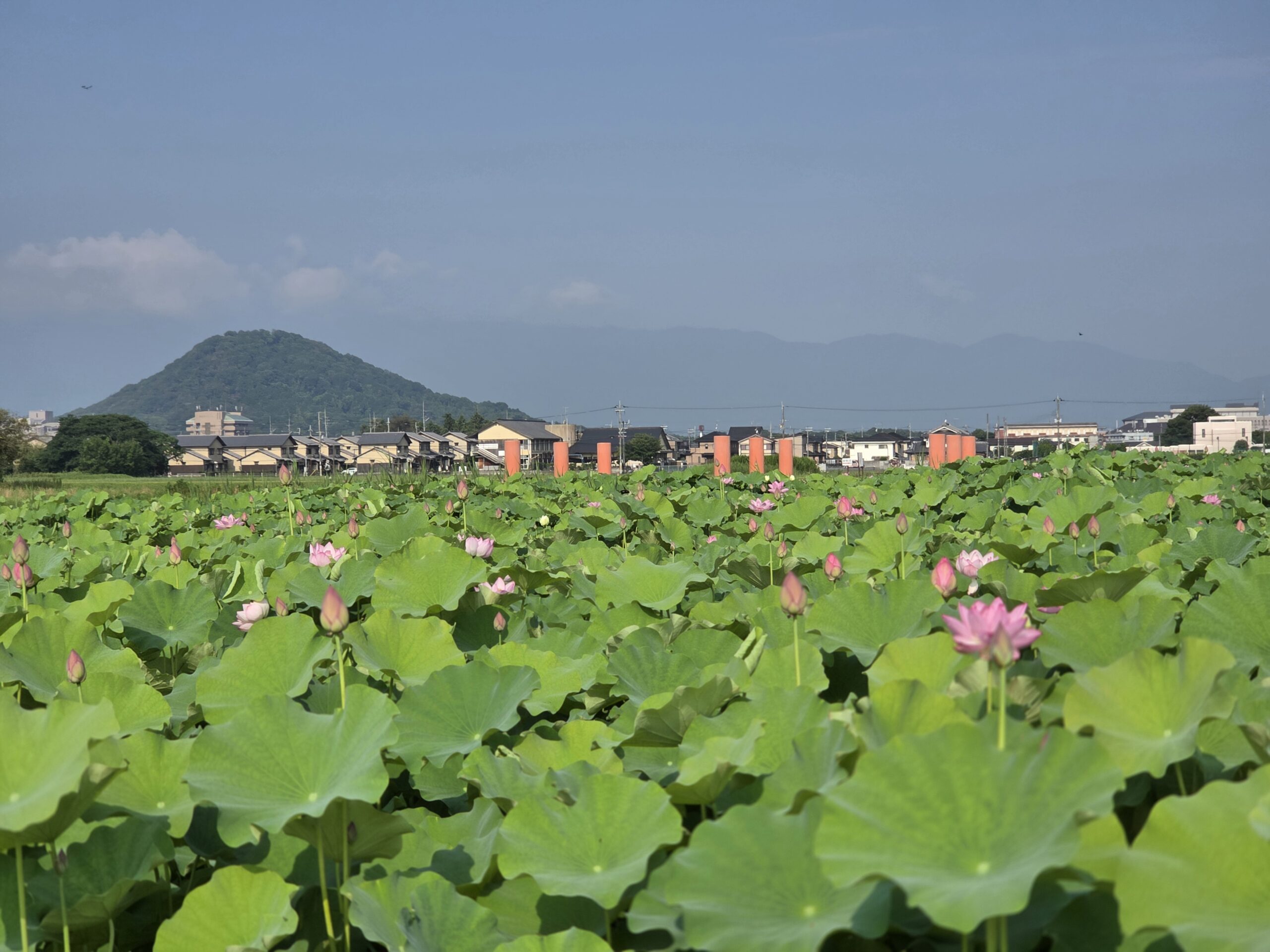
I first became interested in this period not through a textbook, but through a comic book I read three decades ago, about a woman named Empress Jito.
At the time, I simply found her story compelling. Looking back now, I realize how much that one book shaped the direction of my life, all the way to standing in these fields today, telling her story to visitors from around the world.
Jito was the driving force behind Japan’s first true capital city, built in the Fujiwara area of what is now Kashihara, just beside Asuka. To me, she remains one of the most quietly remarkable figures in Japanese history.
Why Asuka, and Why Fujiwara
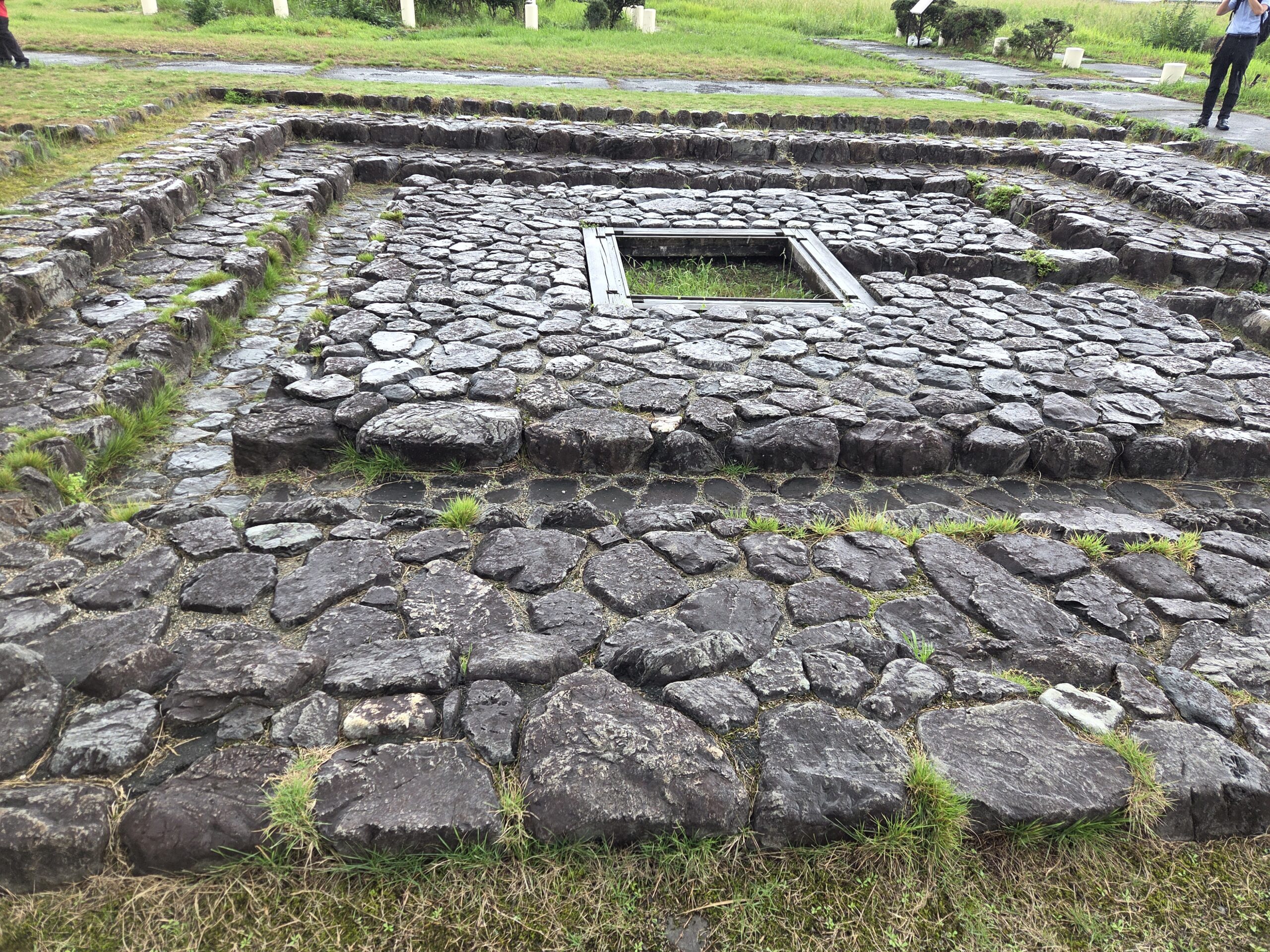
Asuka, Kashihara, and the nearby town of Sakurai formed the center of Japan’s first law-based government, known as the ritsuryo state. Painted tombs found in this area, kept safe through careful research, still show us pieces of that world today.
Modern Asuka is protected by a special preservation law. New construction is tightly limited, and any building that does go up must be built in the old style. This is one reason the valley still feels the way it must have felt centuries ago.
The Asuka court was also very international for its time. Buddhism had just arrived from the Korean peninsula, and Japan was eager to learn. Architects and craftsmen from Baekje taught local builders how to build temples in this new style, and over time these techniques became something distinctly Japanese.
Before this era, each new emperor simply moved to a new palace on taking the throne. In the native beliefs of the time, death was a source of ritual impurity, so a new reign needed a new, unstained site. Diviners were asked before each move, reading signs to choose the right direction and place. Some of the mysterious stones still scattered through Asuka today are thought to be tools once used for this.
Jito changed this pattern. Rather than moving the court once again after her husband’s death, she chose to build something permanent: Fujiwara-kyo, a fixed capital designed to last beyond a single reign.
Reading the Stars in Stone
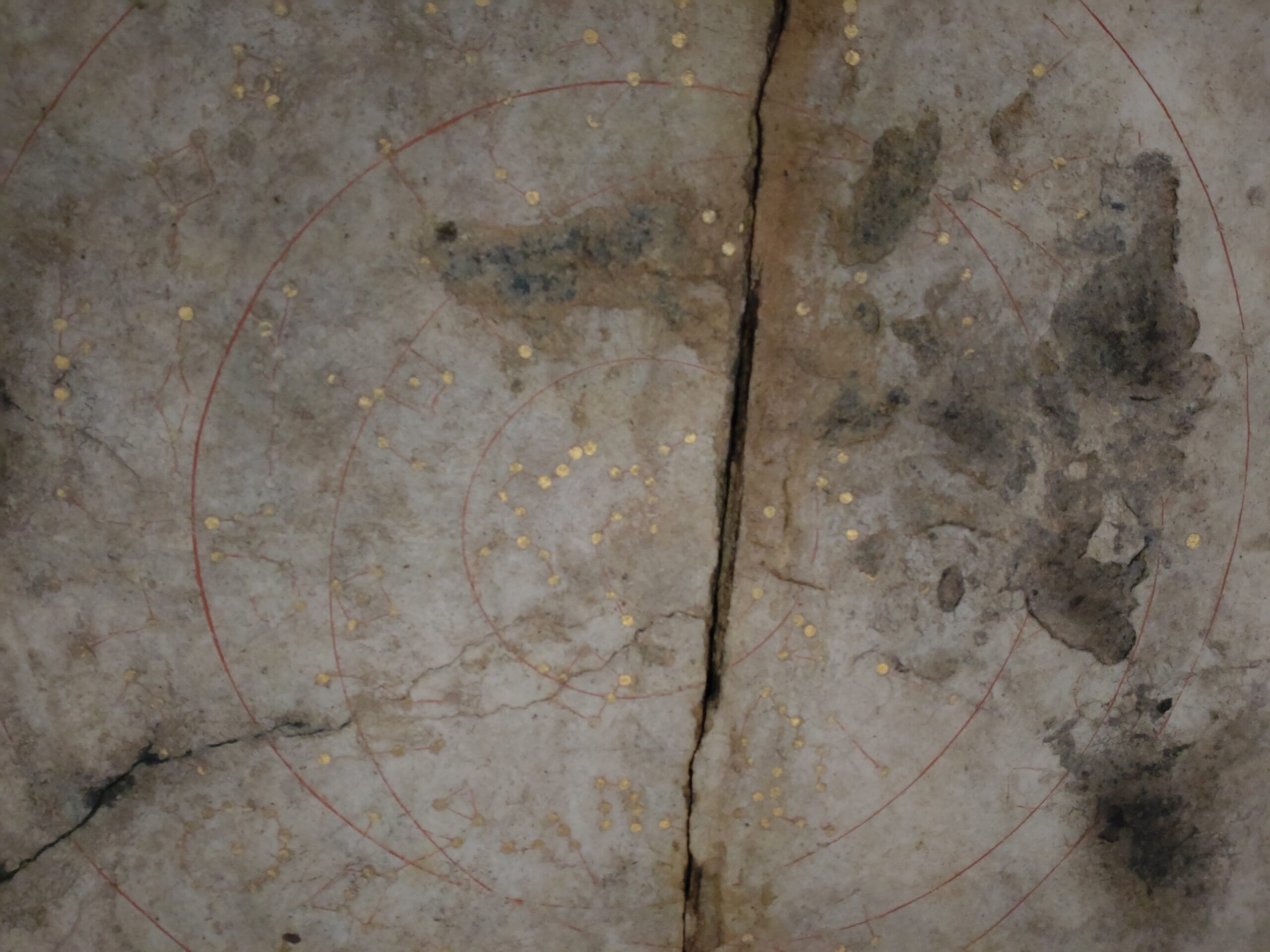
Even the location of that capital was not left to chance. Diviners and geomancers were asked where the emperor’s residence should stand, and the streets of the city were laid out around it.
Direction mattered a great deal. The emperor’s seat was placed in the north, facing south, like the North Star, which never moves while every other star turns around it. It was a quiet way of showing where authority belonged.
We know the astronomers of Asuka were already mapping the night sky, because their work survives. Inside one of the region’s painted tombs, the ceiling still shows a map of the stars as people understood them, painted more than 1,300 years ago.
Standing under a mystery like that, in a small tomb tucked into a hillside, has a way of humbling even a well-traveled guest.
Walk Asuka With Kiyora Travel
I still find something new in these fields every time I return, and I never quite finish learning this history myself.
That may be the real reason I keep bringing people here. Asuka does not show off, the way some famous shrines and castles in Japan do. It asks you to slow down, look closely, and wonder.
With Kiyora Travel, I plan each Asuka trip around what really interests you — the mystery of the stones, the reign of Empress Jito, or simply the quiet of a valley where Japan’s story first began. I would be glad to walk it with you.