.png)
Overview
The first thing I noticed walking toward Omiwa Shrine was what wasn’t there. Beyond the great torii gate and the worship hall, there is no main sanctuary building — because at Omiwa, the mountain itself is the sacred object.
Mount Miwa rises quietly behind the shrine. Omiwa is considered one of the oldest shrines in Japan, and the mountain itself has always been the object of worship here.
At the mountain’s foot and near its summit, clusters of ancient stones called iwakura mark the spots where the shrine’s deity is believed to descend. Rituals have been held at these stones since Japan’s earliest recorded history, and in many ways, that same quiet practice continues today.
The enshrined deity is Omononushi, a powerful god credited in ancient chronicles with ending a great plague that once threatened Japan. For centuries, people have visited Omiwa hoping for protection from illness.
Omononushi is also known as the guardian of sake brewing. Every November, brewers from across Japan gather here to pray for a safe season, receiving a sugidama — a ball of cedar leaves hung outside breweries to mark each new batch.
This walk is a chance to slow down and look closely at a shrine built around belief rather than architecture, and to understand why, more than a thousand years later, it still feels so quietly powerful.
Sample Itinerary
Your guide will meet you at the station to begin the walk toward Omiwa Shrine.
We pass through the shrine’s main worship area, visit Sai Jinja and Kuehiko Jinja, and pause at the mountain viewpoint.
A short walk brings us to a historic sake brewery along the shrine’s approach.
We stop for a bowl of Miwa’s famous hand-pulled noodles.
We wander past sake breweries and a long-established confectionery shop, with time to pause for sweets and tea.
Your guide will accompany you back to the station.
The itinerary may be adjusted according to the season, weather conditions, and crowd levels.
Tour Highlights
Omiwa Shrine – A Sanctuary Without Walls
Passing beneath the huge torii gate, then through a second and third gate, you arrive at the worship hall. But there is no main hall behind it — Mount Miwa itself is the shrine’s sacred object.
Omononushi’s avatar is said to have taken the form of a snake, and offerings of eggs and sake are commonly left in the shrine grounds. Look closely near the worship hall and you may notice them.

Sai Jinja – A Shrine for Healing
Sai Jinja is one of more than forty subsidiary shrines that belong to Omiwa. It is dedicated to recovery from illness, and medicinal trees line the path leading to it.
At the shrine, a spring known as the “medicinal water” still flows. Pharmaceutical companies hold it in such regard that many have donated the stone lanterns along its approach.
Kuehiko Jinja – A Shrine for Wisdom
According to legend, the deity of Kuehiko Jinja possessed such deep wisdom that he understood everything happening in the world without ever leaving his home.
Today, students visit before entrance exams, and the shrine grounds are lined with wooden plaques inscribed with wishes for academic success.
Lunch at a Miwa Somen Restaurant
Somen are thin wheat noodles that require real skill to make by hand, and for centuries, that skill made them a gift fit for people of high rank.
Today, locals still enjoy nagashi somen — noodles sent flowing down a bamboo chute — a refreshing way to eat on a warm day, and a tradition I always enjoy sharing with guests.
Strolling Sando Street
Sando, the approach to Omiwa Shrine, is lined with shops that have served pilgrims for generations.
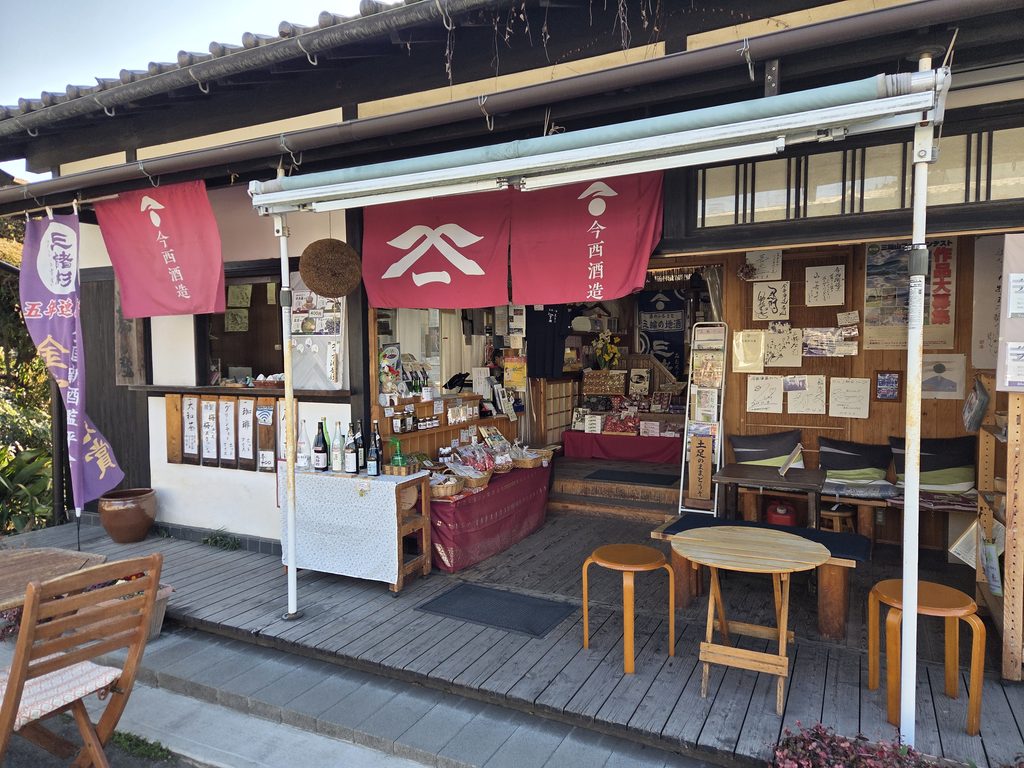
Imanishi Sake Brewery has been making sake here for more than four hundred years, and its tasting room is open from February to October.
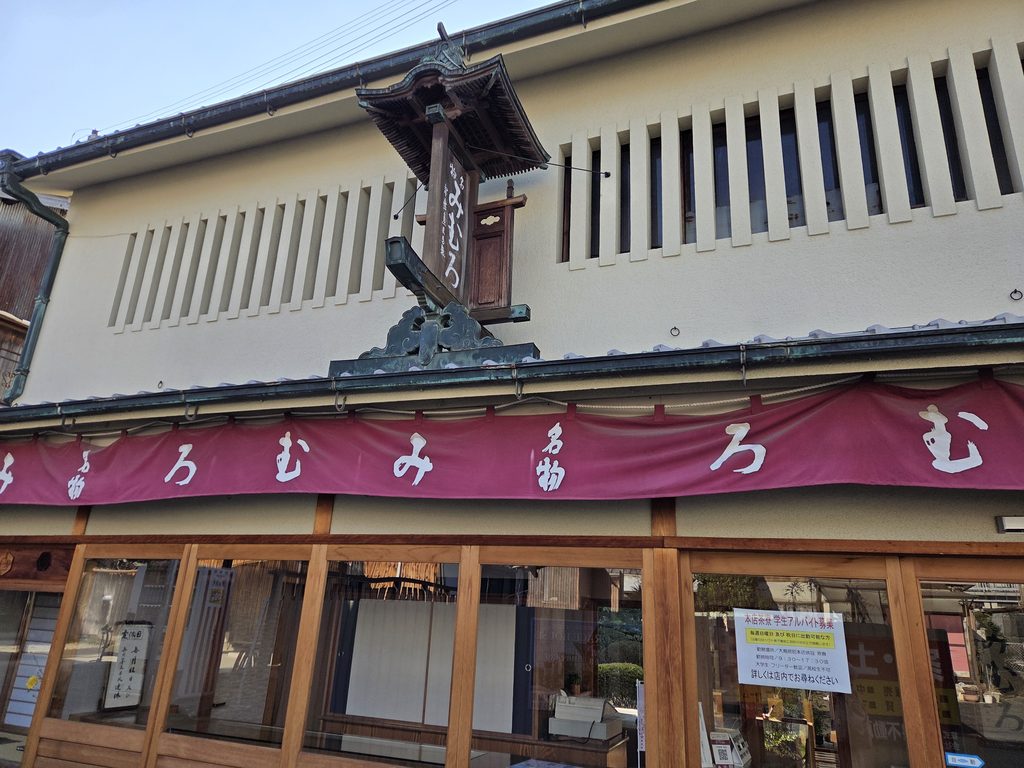
Nearby, a confectionery shop with roughly 180 years of history sells monaka — sweet red bean paste sandwiched between two thin, crisp mochi wafers, named for nearby Mount Mimuro. I like to pair one with a cup of matcha before heading back to the station.
Visit Omiwa Shrine with Kiyora Travel
Omiwa rewards visitors who take the time to look past its scale, from the stones marking where its deity is believed to descend to the quiet rituals that still take place here today.
Every Kiyora Travel tour is shaped around your own pace and interests, whether that means lingering at the sake brewery, learning more about Shinto’s earliest forms of worship, or simply taking your time on the mountain path.
If you would like to explore Omiwa Shrine with a private guide, I would be glad to help plan a visit tailored to your interests. Please contact Kiyora Travel to begin planning your journey.