.png)
Overview
The moment I step off the train in Asuka, the scenery changes. Low hills replace convenience stores, rice fields spread out where a city center might be, and it feels less like arriving somewhere new than like stepping back into Japan’s earliest chapter.
This walking tour brings you to the Takamatsuzuka Kitora tombs, two small burial mounds in Asuka that turned out to hold some of the most remarkable paintings ever found in Japan. Archaeologists are still studying both sites today, and much about who is buried inside remains unknown.
That mystery is part of what keeps me coming back. Neither mound is simply a pile of earth. Inside, ancient artists painted courtiers, guardian deities, and a ceiling mapped with stars, using an understanding of astronomy and construction that still surprises researchers today.
Walking between the two tombs, I like to imagine the same night sky those artists once studied, still visible above Asuka today. This tour suits anyone curious about archaeology, ancient art, or simply standing somewhere history was quite literally uncovered.
Sample Itinerary
Here is a sample itinerary for our Takamatsuzuka Kitora walking tour.
Meet your guide and begin your walking tour .
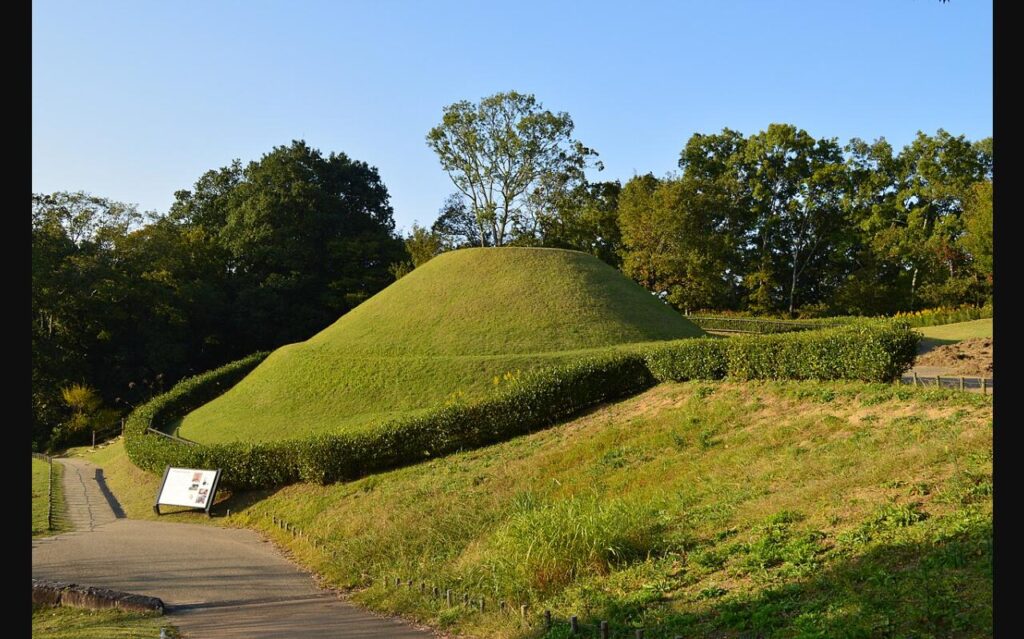
We start the morning at Takamatsuzuka Tomb, where a painted chamber over 1,300 years old lies just beneath a quiet grass mound.
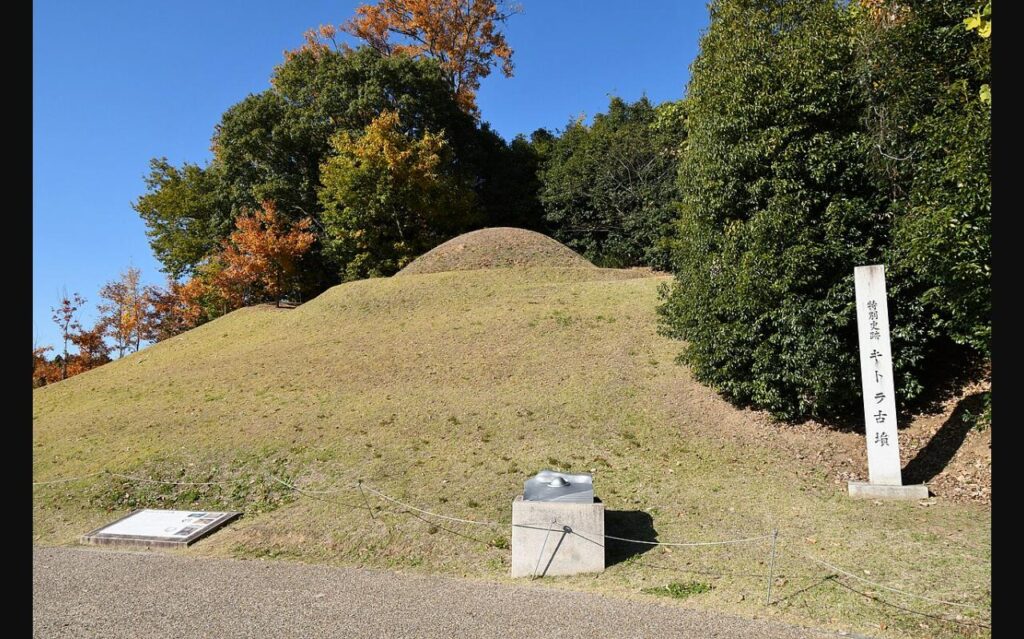
A short walk brings us to Kitora Tomb, home to the oldest known star chart in East Asia.
We stop for lunch at a small local café near Asuka Station.
Your guide will accompany you back to the station.
The itinerary may be adjusted according to the season, weather conditions, and crowd levels.
Tour Highlights
Takamatsuzuka Tomb – A Painted Chamber Frozen in Time
Local villagers stumbled onto Takamatsuzuka Tomb by accident in 1970, but it was the discovery of its murals in March 1972 that made headlines across Japan. Painted on the stone chamber walls are groups of courtiers and women in richly colored robes, along with the sun, the moon, and the four guardian gods of Chinese cosmology.
The tomb is believed to have been built between the late 7th and early 8th centuries, and its murals were designated a National Treasure in 1974. Because the original chamber is sealed for preservation, we view detailed replicas at the Takamatsuzuka Mural Hall, alongside the sea-creature-and-grape bronze mirror, sword fittings, and coffin ornaments excavated from the tomb.
Kitora Tomb – The Oldest Star Chart in East Asia
Kitora Tomb sits close enough to Takamatsuzuka to reach on foot, and the two mounds look so similar that visitors often mistake them for twins. Its murals stayed hidden until 1983, when researchers lowered a fiberscope through a looters’ hole and found painted walls still largely intact.
Kitora is the only known tomb in Japan where all four guardian deities have survived together, along with painted figures of the Chinese zodiac. Its ceiling star chart, made up of 277 stars, is considered the oldest realistic star chart found in East Asia. The preserved murals are on view at the Shijin no Yakata museum through a viewing window, on a limited reservation schedule.
Lunch at a Local Café
For lunch, we head to one of the small cafés near Asuka Station, many of them set inside renovated old houses. It is a relaxed way to enjoy local ingredients before continuing on to explore more of the village.
Walk the Takamatsuzuka Kitora Tombs with Kiyora Travel
I never get tired of guiding this tour. Few places let you stand this close to a 1,300-year-old mystery, painted colors and all, and still feel the quiet of the countryside around you.
Every Kiyora Travel tour is shaped around your own pace and interests, whether that means lingering at the mural museum, asking questions about Asuka’s history, or simply taking your time walking between the two mounds.
If you would like to explore Takamatsuzuka and Kitora tomb with a private guide, I would be glad to help plan a visit tailored to your interests. Please contact Kiyora Travel to begin planning your journey.